
Some customers decide fast. The ones spending real money, hiring a firm, signing a long-term contract, almost never do. They hesitate, research, compare, and quietly wait for a reason to trust you before committing. Pushing harder rarely closes that gap. Reducing their perceived
risk usually does.
Trust-based conversion is the practice of moving hesitant, higher-value customers toward a decision by building confidence and reducing risk rather than applying urgency or pressure tactics. It relies on consistent communication, visible credibility, and reassurance at each stage of the decision process rather than a single closing pitch. For cautious buyers specifically, removing doubt tends to convert more reliably than adding incentive.
The quick version
● Hesitant buyers respond to reduced risk, not increased pressure.
● Social proof and clear communication matter more as price and stakes rise.
● Professionalism and consistency build credibility before a sales conversation even starts.
● Reassurance works throughout the process, not just at the final close.
Where trust actually gets built or lost
● First impressions from a website, proposal, or initial call set the tone early
● Consistency between what’s promised and what’s delivered builds credibility over time
● Clear, jargon-free communication reduces confusion that breeds hesitation
● Visible proof, reviews, case studies, credentials, reduces perceived risk substantially
● Small broken promises, a late reply, a vague answer, erode trust disproportionately
Reviewing website trust signals shows how much weight visitors place on small credibility cues, security badges, clear team information, visible reviews, before ever engaging directly with a business.
A practical trust-building checklist
● Respond to inquiries within a consistent, predictable timeframe
● Share specific, quantifiable results instead of vague success claims
● Make pricing and terms clear before a prospect has to ask
● Offer a low-risk next step, a consultation or trial, before a full commitment
● Follow up with reassurance, not urgency, after initial contact
Social proof does more work than most pitches
Hesitant buyers rarely trust a company’s own claims about itself. Looking into social proof sales tactics makes clear that third-party validation, reviews, testimonials, visible client counts, consistently outperforms direct persuasion for reducing buyer doubt. This effect gets stronger, not weaker, as the price of the decision increases.
For B2B specifically, this pattern holds even more. Reviewing B2B trust building research shows credibility signals shorten sales cycles more effectively than discounting ever does.
Reducing risk without discounting
Lowering the price isn’t the only way to lower perceived risk. Exploring risk reversal strategies like guarantees or trial periods often converts hesitant buyers more effectively than a price cut, since it directly addresses the fear driving the hesitation.
Clear paperwork matters too, especially for higher-value agreements. Making it simple to e-sign a PDF removes friction at the exact moment a cautious buyer is ready to commit, when any added hassle can reintroduce doubt.
What builds confidence at each stage
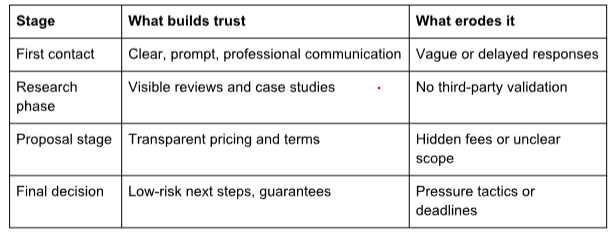
For businesses working with cautious or higher-value clients, case studies for high ticket sales can carry more weight than a strong pitch alone. Communication consistency also matters at every stage, and firms specializing in strategic communications planning can help businesses
build the kind of clear, credible messaging that reassures cautious buyers throughout a longer decision cycle.
Frequently asked questions
How do you convert hesitant customers without using pressure tactics? Focus on reducing their perceived risk through guarantees, clear communication, and visible proof rather than urgency or deadlines. Reassurance at each stage of their decision tends to convert
cautious buyers more reliably than pressure.
Does social proof really matter for high-value or B2B sales? Yes, third-party validation like case studies and testimonials often outweighs a company’s own claims, especially as the size of the decision increases. It shortens the time buyers spend hesitating.
What’s the fastest way to build credibility with a new prospect? Consistent, prompt communication paired with visible, specific proof of past results builds credibility faster than a strong sales pitch alone. Small early signals of reliability set the tone for the entire relationship.
Converting hesitant, higher-value customers comes down to reducing their risk and increasing their confidence at every step, not pushing harder at the close. Build visible proof, communicate clearly and consistently, and remove friction wherever it appears in the process. The businesses that win cautious buyers are usually the ones patient enough to earn trust before asking for the sale.